
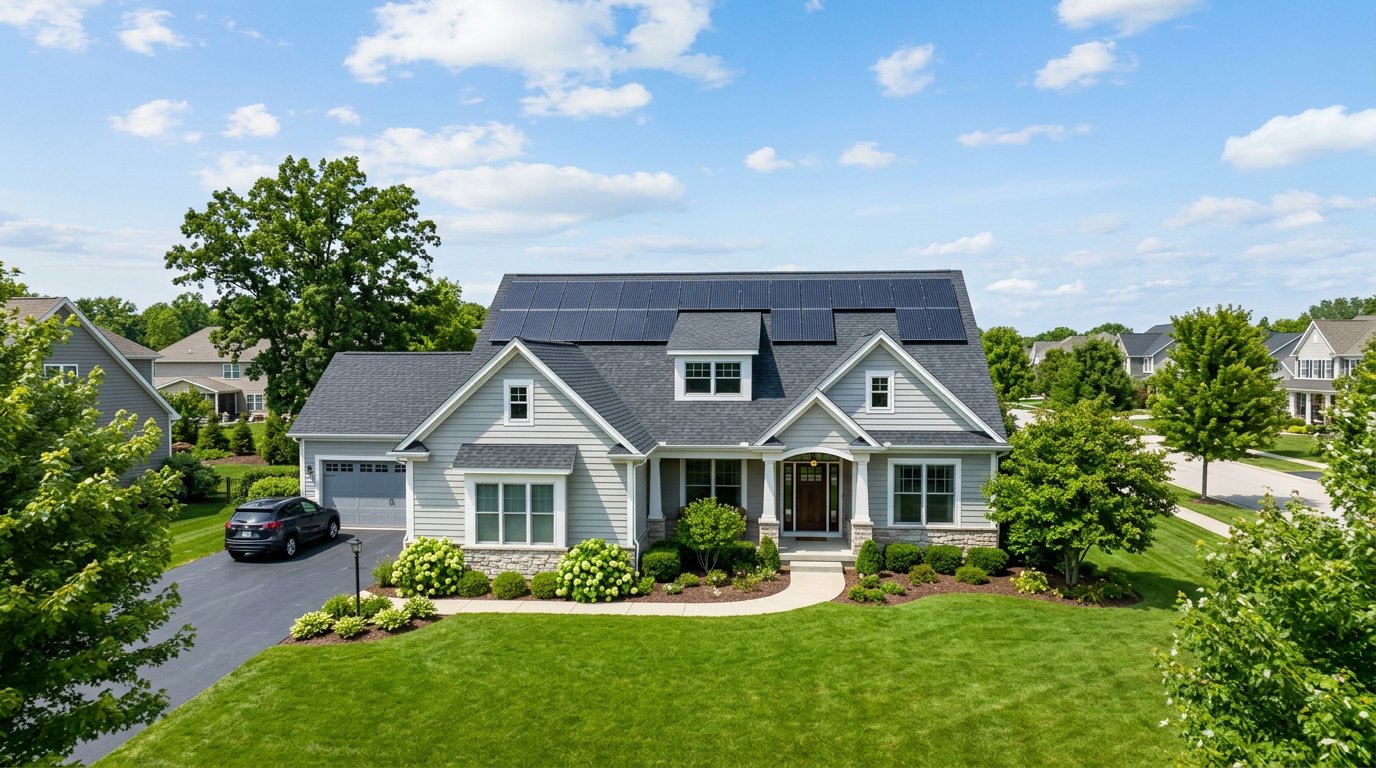
Some home upgrades are purely cosmetic, and some are quietly transformational. Roofing and solar belong firmly in the second camp. Your roof shields everything you own from Long Island's wind, rain, and snow — and the sun beats down on that same roof all day, every day, for free. Pairing the two upgrades turns one of your home's most durable surfaces into one of its hardest-working assets. Here's why they belong together on your wish list.
Always start with the roof itself. Solar panels are designed to stay put for a very long time, so the roof beneath them should be in great shape before a single panel goes up. A quick, honest inspection answers the key questions: How much life do the shingles have left? Is the decking sound? Are flashing and ventilation in good order? If the roof is young and healthy, a solar project can proceed cleanly. If it's nearing the end of its life, replacing it first avoids paying to remove and reinstall panels later — a cost nobody enjoys.
How home solar actually works, in plain language. Panels on your roof convert sunlight into electricity. An inverter turns that electricity into the kind your home uses, and you draw from your own roof before you draw from the grid. When your panels make more than the house needs, the extra flows back to the grid — and depending on your utility's rules, earns you credit toward the power you pull at night. No moving parts, no noise, no change to your daily routine. The sunshine just quietly pays part of the bill.
The everyday benefits add up. The first thing most homeowners notice is a calmer utility bill — steadier and lower, month after month, while neighbours' rates wobble. Beyond the finances, there's a subtle satisfaction in knowing that sunlight falling on your house is doing something useful. Households that add battery storage gain another layer of comfort: the fridge, the lights, and the Wi-Fi can keep humming right through an outage, which Long Island weather occasionally insists on testing.
Durability is the quiet headline. Quality panels shrug off ordinary hail, snow loads, and coastal winds — they're engineered for decades of exposure, and performance warranties typically match that long-haul spirit. Meanwhile, modern roofing materials keep getting tougher: architectural shingles resists wind far better than older styles, and proper underlayment and ice barriers protect the vulnerable spots. Done together, a roof-and-solar upgrade is less a purchase and more a long-term shield for your home.
There's a resale and environmental bonus, too. Energy-conscious buyers increasingly scan listings for owned solar systems and newer roofs, because both mean lower costs and fewer projects after move-in. And every kilowatt-hour your roof generates is one the grid doesn't have to produce elsewhere — a genuinely cleaner way to run a home, powered by the one resource that arrives daily and never sends an invoice.
What does the process actually feel like? Easier than most people expect. It begins with an assessment — your roof's condition, orientation, shading from trees, and your household's energy habits. From there comes a custom design and a transparent proposal, followed by the paperwork: permits, and your utility's approval to connect. The installation itself is typically measured in days rather than weeks, capped by an inspection and the satisfying moment your system switches on. One coordinated team keeps every stage — roofing first, then solar — in the right order, which is exactly how we work.
The bottom line: a tired roof costs you slowly, every single day, in energy and risk. A solar array on a sound roof pays you back slowly, every single day, in energy and resilience. If you suspect either upgrade might be in your home's future, let's take a look together. Our solar and roofing service starts with an honest assessment and a clear plan — no pressure, no jargon, just straight answers about what your roof can do for you.